-
Occupational Certificate : Welder
 Register Now
Career Overview: What do I do for a living?
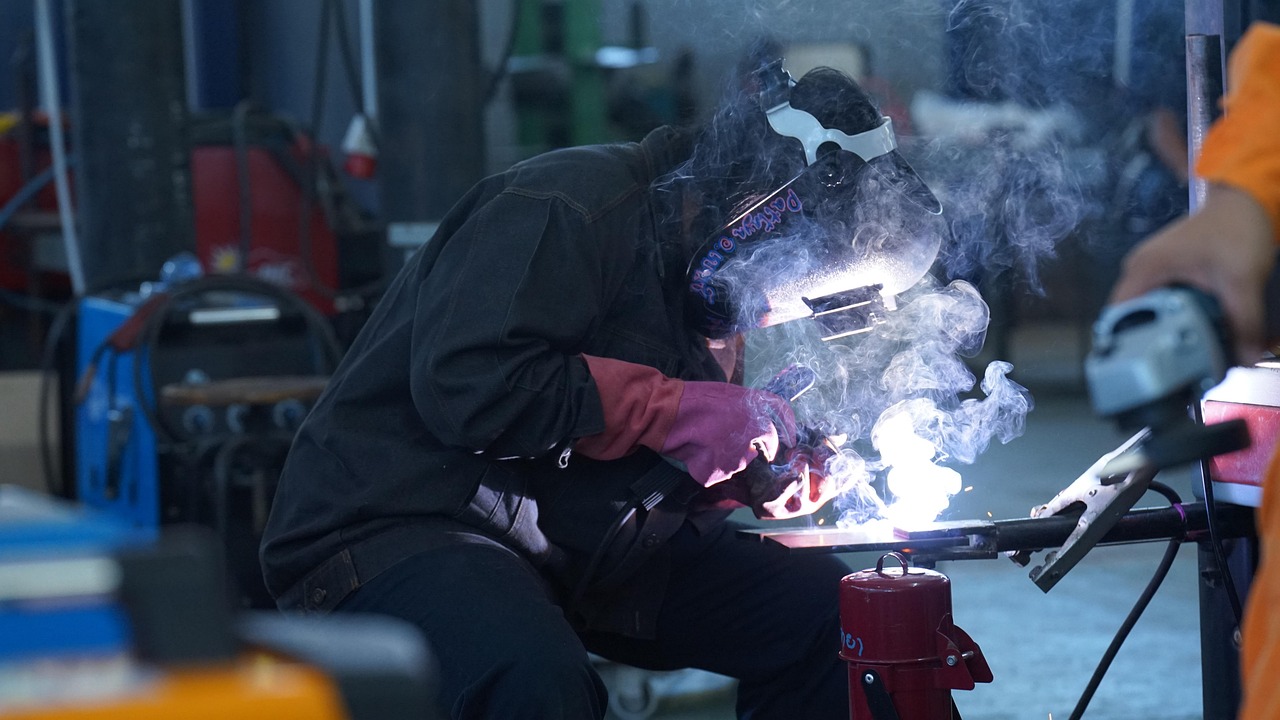
Welders use their knowledge of metals and physics as well as their dexterity to fuse various materials together. Quite often, they have to work with steel, aluminium or brass as well as polymers. Their equipment consists of a stick welder, a charged electrode, wire feeds, and safety gear.
A welder must possess an in-depth understanding of welding electrodes, filler wire compositions and fluxes, and how to store them. Expert welders must also identify quickly defects and fissures in metalwork, and know how to rectify them by filling in holes and indentations
Working as a welder may also provide experience in cutting, soldering, and brazing. Welders who possess these skills have a better chance of getting more work and subsequent higher pay.
Cutting involves the trimming of metal objects with arc, plasma or oxy-gas cutters. Soldering and brazing are forms of joining two or more metal objects together, but at a lower temperature than welding.
Welding imposes a few occupational hazards and dangers. The risk of injury in this vocation is high if the artisan does not possess excellent skills in safety and first aid, fire-fighting and preventative security measures
Recognition of Prior Learning (RPL):
RPL for access to the external integrated summative assessment: Accredited providers and approved workplaces must apply the internal assessment criteria specified in the related curriculum document to establish and confirm prior learning. A statement of result or certified work experience record must then be issued by the accredited provider or workplace to confirm prior learning.
RPL for access to the qualification: Accredited providers and approved workplaces may recognise prior learning against the relevant access requirements.
What can I become?
Fabricator / Welder, Plater-welder / Welding Inspector / Sheet Metal Worker / Pipe Fitter / Mig Welder / Steel Worker / Oil Rig Welder / Auto body Welder
Where can I work?
Typical employers include:
- The motor body manufacturing industry
- Power plants and refineries
- Metal industries
- Gate and fence maintenance and repair
- Railway undertakings
- Heavy engineering
- Explosives industry
- Construction of buildings, bridges and other structures
What is the duration of the course?
The Duration is 3 years
How to Work as a Welder in South Africa
- Programme Name: Occupational Certificate: Welder
- Duration: 36 Months (Includes Theory, Practical, Workplace)
- NQF Level: Level 4
- Accrediting Body: QCTO
- Entry Requirements: Grade 9 or NQF Level 1 equivalent
How to Apply
Apply online by clicking the button below or visit our Durban campus. Our friendly admin staff are ready to assist you through the enrollment process.
Apply NowWhat is a Welder’s Job?
A welder’s main duties include:
Studying blueprints and understanding their specifications
Calculating the dimensions of the objects that need to be welded
Inspecting the condition of structures and materials involved in the process
Working with ignition tools and power supplies
Cutting, gouging and gas welding of ferrous materials
Welding cautiously to avoid overheating
Using hand tools of various types
Repairing faulty pieces
Ensuring the maintenance of welding equipment
What is the minimum entry level?
Grade 9, Matric( Grade 12) NQF Level 1 with Communication and Mathematical Literacy.
Fees
- Registration Fees: R1000
- Deposit: R5000 ( Includes Student Card, Course Material/ Study Material / Assessments Fees)
- Monthly Instalment: R3000